Beverage coolers, beer coolers, four- and six-door upright refrigerators, stepped display cabinets. Four families, one sheet-metal and foaming line, one QC standard — built to your voltage, your plug and your brand.
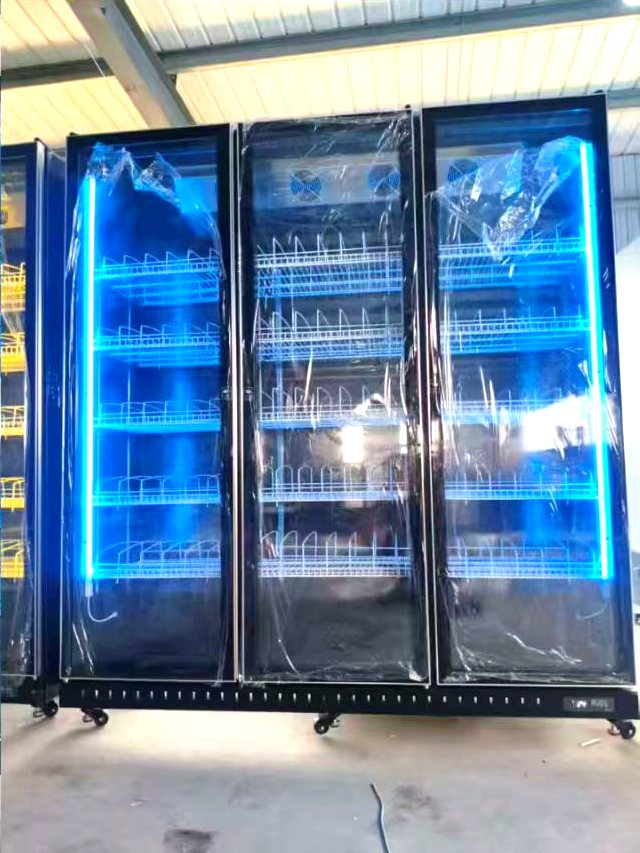
We do not quote cooking ranges, dishwashers, shelving or stainless work tables. Staying inside four refrigeration families is what lets a factory of our size hold tolerance on foaming density, door alignment and pull-down time.
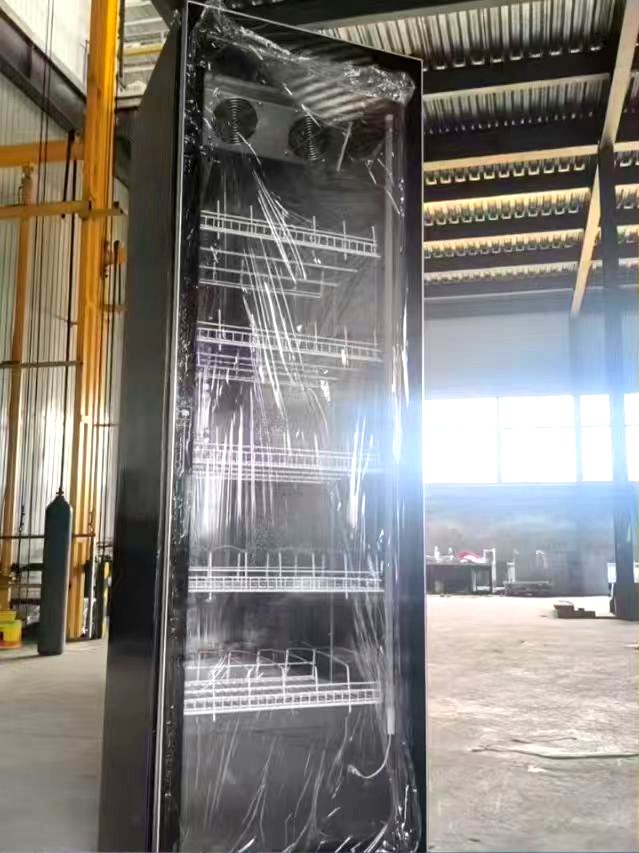
Glass-door upright coolers for selling cold drinks at the point of purchase. One, two or three doors, 0 to +10 °C, anti-condensation glass.
View specifications →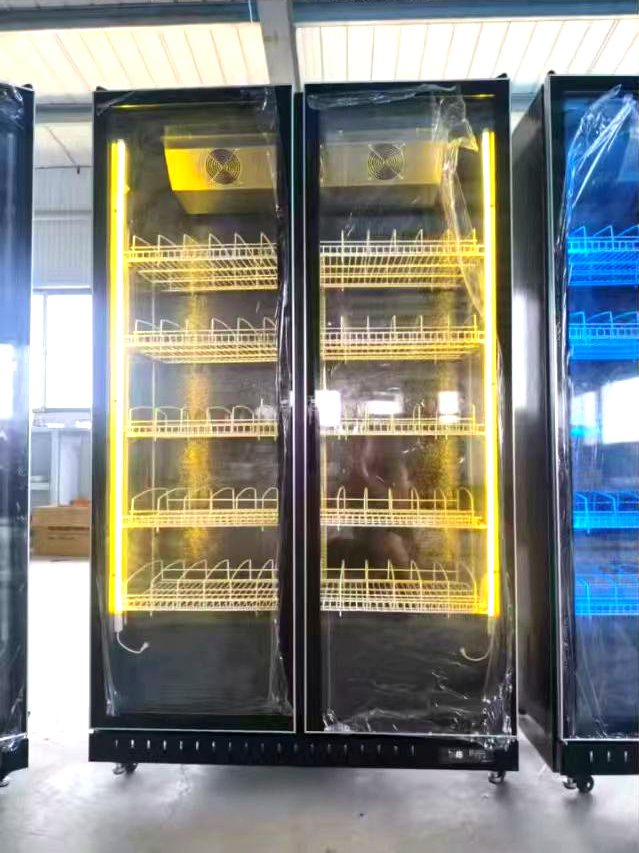
Wide back-bar and bottle-shop coolers with a branding light box, night curtain and shelves pitched for 500-630 ml bottles.
View specifications →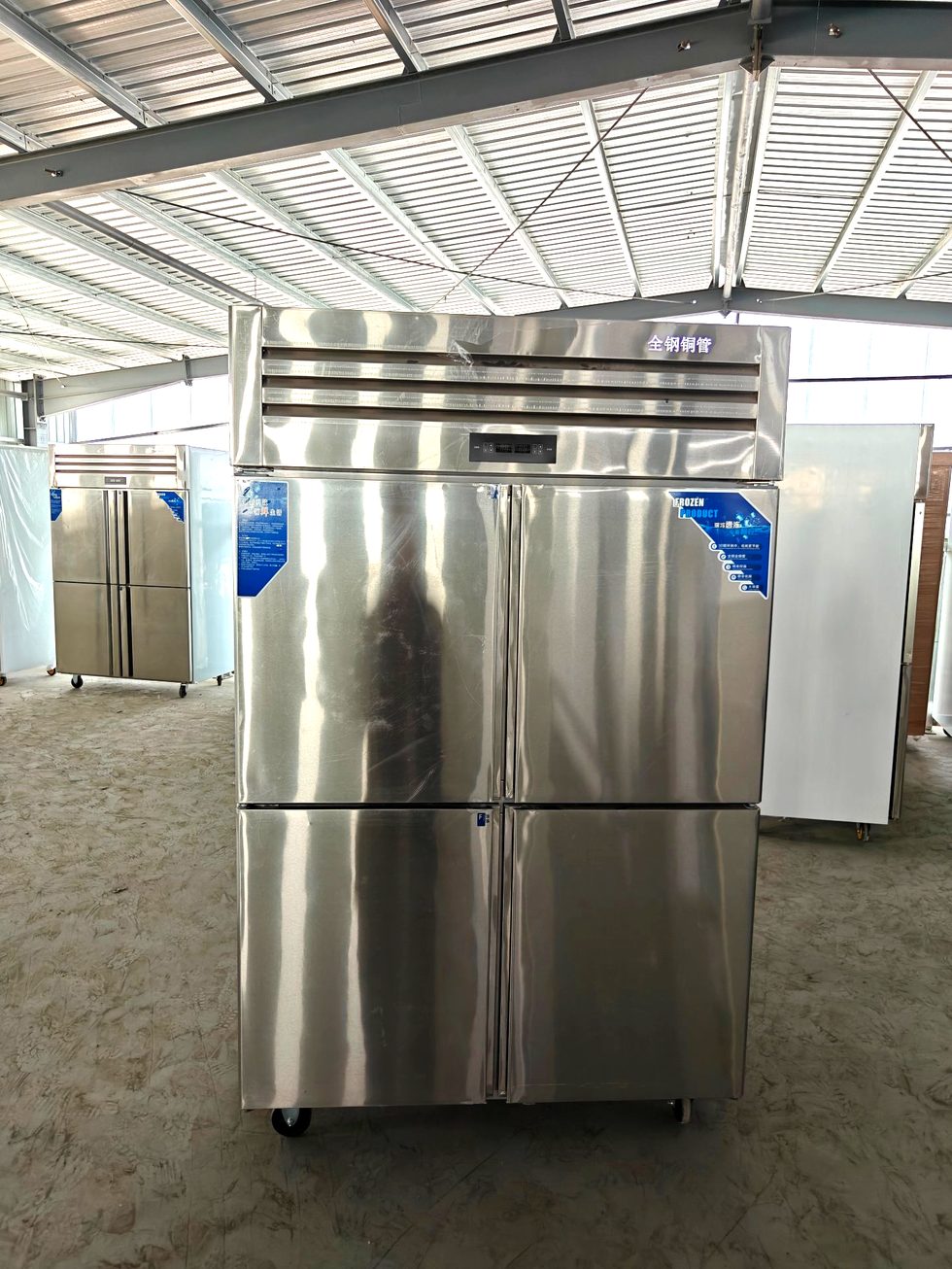
Stainless upright chillers and freezers for restaurant kitchens. Forced-air cooling, GN 2/1 compatible, single or dual temperature.
View specifications →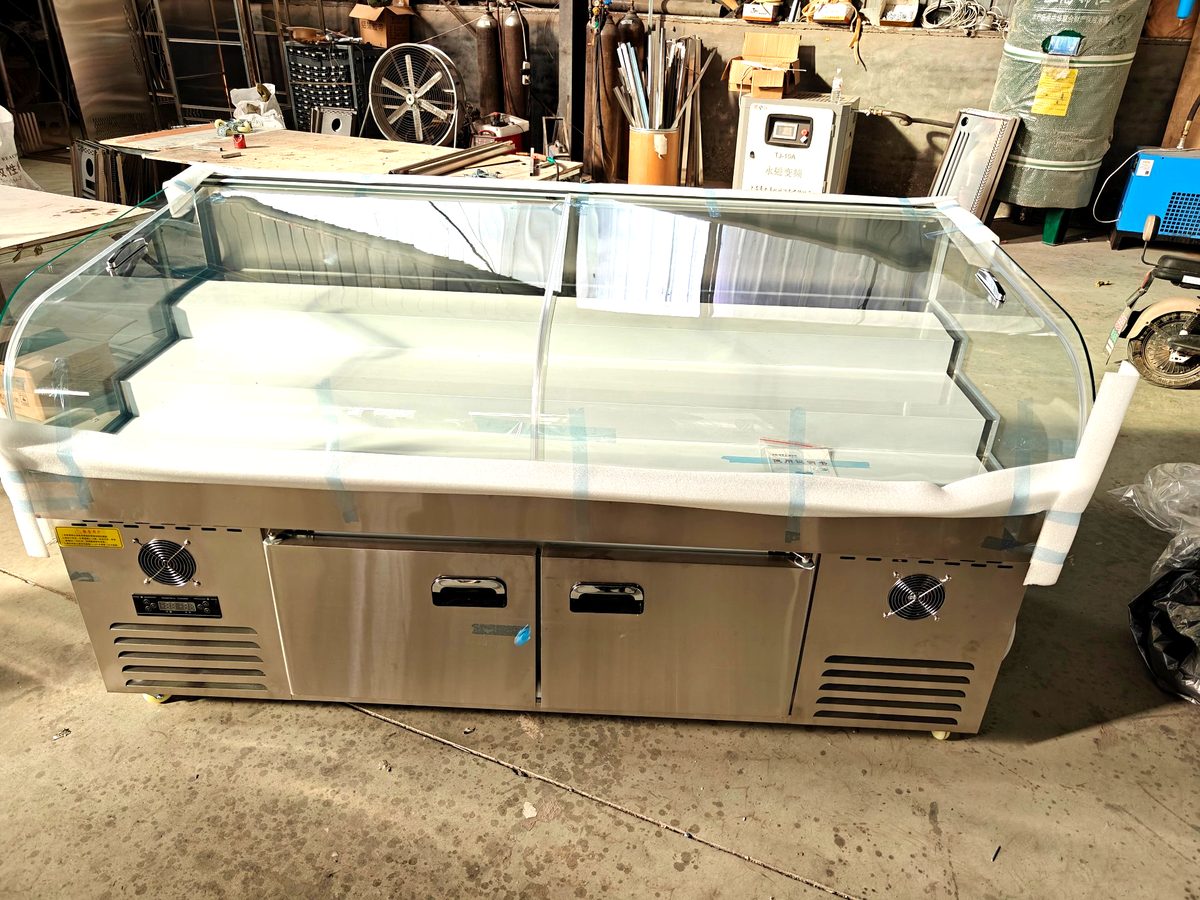
Tiered open-front refrigerated displays for deli, dairy, drinks and desserts. Two or three steps, LED under every step, night blind.
View specifications →A general kitchen-equipment factory changes over its line every few weeks. A refrigeration-only factory runs the same moulds, the same door frames and the same leak-test bench every day — and that repetition is where consistency actually comes from.
Foaming is where cheap cabinets fail first: too little density, or a mould that is not clamped properly, and the insulation slowly absorbs moisture. Everything downstream of that stage is cosmetic.
Coil and sheet are cut and folded to the cabinet shell. Door frames are formed on dedicated dies.
Shell seams welded, degreased and phosphated before foaming.
PU injected into the dedicated mould. Density is sampled, not assumed.
Compressor, condenser, evaporator, wiring harness, door and gasket.
Refrigerant weighed in, then held under pressure and sniffed at every joint.
Every unit runs to temperature and is logged before packing.
A cooler that holds temperature in a 25 °C test room can run continuously at 40 °C and 80% humidity. If your market is in Southeast Asia, the Gulf, or an Egyptian summer, say so at quotation stage — the build changes.
Keeps the outer pane clear when relative humidity passes 80%. Standard on beverage and beer coolers.
Extra coil surface for high ambient, so the compressor is not asked to run flat out all day.
220-240 V 50 Hz, 110-120 V 60 Hz, or 220 V 60 Hz — wired and tested at the factory, not converted on site.
Time from ambient to set point is recorded per unit and can be sent with the shipping documents.
Shelf spacing set to the bottle or can you actually sell, not to a default 60 mm.
Evaporative tray on most models — no drain line to run, which matters in retrofit sites.
Nameplate, carton print, manual language, plug type and voltage can all be yours. What we will not do is promise a certificate we do not hold — ask for the current certificate pack and we will send exactly what exists for that model.
Silk-screened logo, nameplate, light-box graphic, carton print and manual in your language.
Voltage, plug, refrigerant and climate class set for the destination before the unit is packed.
A 20GP / 40HQ loading plan with unit count and weight is issued before you book freight.
Ten units per model for the standard configuration. Mixed models can be combined into one container. Custom colour and custom moulds have their own thresholds — ask for the current figure with your enquiry.
Yes. 220-240 V 50 Hz, 110-120 V 60 Hz and 220 V 60 Hz are all built and run-tested at the factory. Send the destination country and we will confirm the plug standard.
Certification status differs by model and is not universal across the range. Tell us the destination and the document the importer needs, and we will send the certificates that actually exist for that model rather than a generic claim.
Ask for the pull-down log of your units, photos of the foaming and leak-test stages, and a third-party inspection at our works. We would rather you inspect than hope.
Send a specification or a photo of what you sell today. You will get a model recommendation and a loading plan, not a generic catalogue.